
Tooth Extractions – Acworth, GA
Remove Your Troublesome Teeth to Protect Your Dental Health
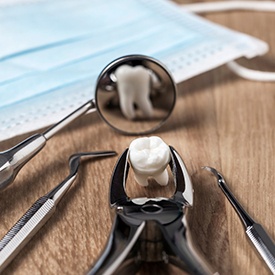
You can usually count on our compassionate providers to do all they can to help prevent oral issues or treat anything that comes up, which helps preserve your teeth and gums. But if you have more severe tooth decay, periodontal disease, or physically injured enamel, we may have no choice but to remove your troublesome teeth to protect your dental health.
We understand that many patients feel nervous or have questions about why this procedure is required. Continue reading to learn more, and please contact us for additional information.
Why Choose Biologic Dentistry for Tooth Extractions?
- Needle-Free Sedation Available
- Advanced Technology for Enhanced Comfort
- Flexible Financing Available
Reasons Why Tooth Extractions Are Necessary

It’s only natural to wonder whether extraction is truly necessary, and you might even wonder whether another treatment, such as a root canal procedure, might help improve your condition. But the truth is that if we’ve suggested this service, we have likely already determined that no other options could effectively repair the damage, and this might be the only way to prevent progressively worsening problems.
We might recommend removal to address the following concerns:
- Irreparable decay or injuries that cannot be addressed with fillings or restorations.
- Severe infection at risk of spreading to your other teeth, jawbone, or gum tissues or entering your bloodstream.
- Advanced-stage gum disease (periodontitis) that has eroded the bone or connective tissues anchoring the affected tooth.
- A stubborn baby tooth that has not fallen out on its own.
- Alleviate toothaches, especially around trapped or impacted teeth.
The Process of Removing a Tooth
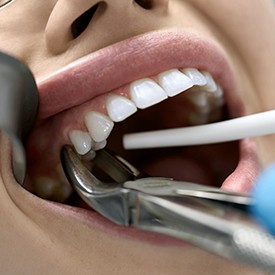
We understand that you might feel anxious or worry that your procedure might hurt, and we will do everything we can to help soothe any frayed nerves. For instance, we offer needle-free comfort with NuCalm sedation, a 100% drug-free option that relies on noise-canceling headphones and a biosignal disc that play neuroacoustic sounds to help set your brain waves into a state of deep calm and relaxation. We also offer nitrous oxide (laughing gas), which is inhaled through a mask placed over your nose while we work.
Once you’re comfortable, we’ll proceed by gently elevating your tooth from the socket with a device known as an ‘elevator’. This makes it easier for us to grasp the enamel with forceps so we can gently wiggle the tooth free from its socket. If it is trapped in the gums, we may have to make a small incision to access it, and it might have to be removed in pieces to avoid damaging the jawbone.
Tooth Extraction Aftercare

Our team will provide a list of aftercare instructions that are intended to help you heal as quickly and effectively as possible. For example, it’s essential that your mouth forms a blood clot over the site to protect the recently exposed nerves and tissues.
Many post-op directions are meant to help preserve this clot to avoid complications, such as infection or a painful condition known as dry socket, and can include:
- Drink plenty of water to support your immune system and keep your mouth clean, but avoid using straws because the force of suction can dislodge the blood clot.
- Manage associated swelling or soreness by applying an ice pack, rinsing your mouth with salt water, or taking the recommended dosage of over-the-counter solutions, such as acetaminophen or ibuprofen.
- Avoid smoking cigarettes or vapes or using other tobacco products, which suppress your body’s defenses and make it harder to deliver infection-fighting cells and other nutrients to your mouth for a successful recovery.
- Keep your head elevated when you sleep to keep additional blood from pooling behind the site, which can place additional pressure on your already-tender tissues and nerves.
- Stick to softer, wholesome foods, such as scrambled eggs, yogurt, blended fruit smoothies, and applesauce, to avoid triggering additional aches or irritation.